Suzanne Forcese
“A proposed silica sand mining project and a proposed float glass plant-- that or may not be able to produce solar glass-- cannot hide the fact that the CPS proposed development project will have real world environmental impacts, infringe on Treaty 5 Rights, and pose potentially serious community health issues once CPS pulls up stakes and leaves town.”
–Don Sullivan, Director What the Frack Manitoba
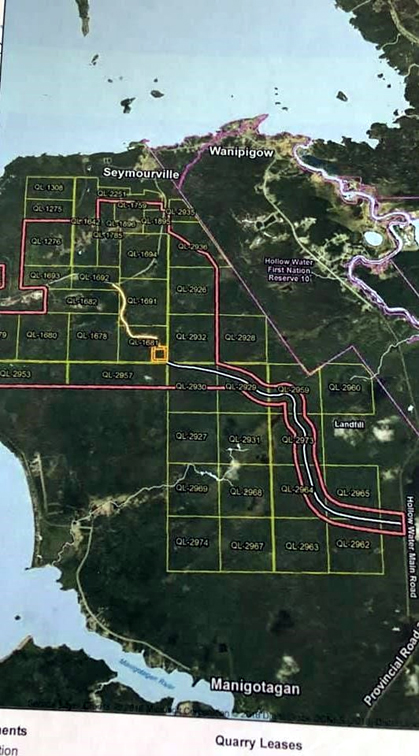
Canadian Premium Sand (CPS), an Alberta-based company proposing to operate a silica sand mine adjacent to Hollow Water First Nation on the eastern shores of Lake Winnipeg has revamped its 2019 proposal, shifting its focus from mining frac san to mining silica sand for solar glass manufacturing.
“We are still on Treaty 5 Territory opposing Canadian Premium Sand’s newest proposal to mine a smaller deposit of silica sand for solar glass,” MJ McCarron, Camp Morningstar’s spokesperson told WaterToday. “However, we have not seen a change in the CPS Technical Report that still includes the remainder of the larger deposit to be potentially used for frac sand mining. Further, CPS has yet to file a new application for an environmental licence as required.”
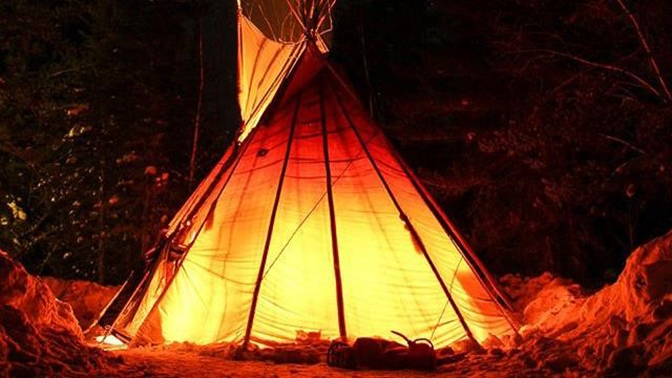
The fire is still going strong after 3 years and will remain on the community-designated trapline where CPS wants to mine silica sand.
Questions arise from both Camp Morningstar and What The Frack Manitoba (WTFM) as to the ability of CPS to mine silica sand that would be suitable for the manufacture of standard glass products.
According to the CPS Technical Report... “based on the silica, iron, and other elemental contents of the mechanically and chemically treated sand in these beneficiation tests—and depending on market and manufacturing conditions – the Wanipigow LBI sand can be used to manufacture standard glass products such as flat glass, coloured container glass, and insulating fibers.”
The Technical Report goes on to state that it would be theoretically possible to produce solar glass but would require an enhanced beneficiation method on much larger batches of silica sand to prove that it is possible to reduce the iron content low enough in the silica sand that would meet market standards.
“An enhanced beneficiation method would require CPS to employ an acid leaching process to remove the iron content from the silica sand which would be extremely harmful to the environment,” WTFM’s Don Sullivan cautions.
“There will be a very large hole in the ground at the CPS mine location where lots of toxic wastewater will be left sitting in that very big hole once the silica sand is excavated by CPS.”
A layer of shale lies above the sandstone layer where the prized silica sand is located.
Shale containing pyrite generates acid when exposed to air and moisture.
“This shale layer will be exposed at the excavation face of the proposed silica sand mine, resulting in acid draining into the excavation hole,” Sullivan continues.
A CPS Technical Report established (both by chemical analysis and electron microscope images) that the silica sand to be excavated contains sulphite in the form of marcasite which will also generate acid when exposed to air and moisture, exacerbating the acid drainage problem.
“The acid from the sand will also contribute to the acid drainage down the evacuation face mobilizing heavy metals.
“Groundwater and any nearby wells will be contaminated.”
The communities involved have concerns stemming from first-hand experience of a now abandoned silica sand mine operation on Black Island located directly across from Hollow Water.
“That mine operated for decades. The toxic water has been sitting in in a big hole for decades more – and has never been remediated,” Sullivan told WT.
Another serious concern has been raised by the surrounding communities to the proposed mining site.
Silica sand is accumulated in mountainous piles before processing.
Tiny bits of silica can cause a type of pulmonary fibrosis, a lung disease (silicosis) caused by breathing in silica dust.
“This has the potential to cause cancer and tuberculosis for those working and living near the proposed mine.”